The LabSchool


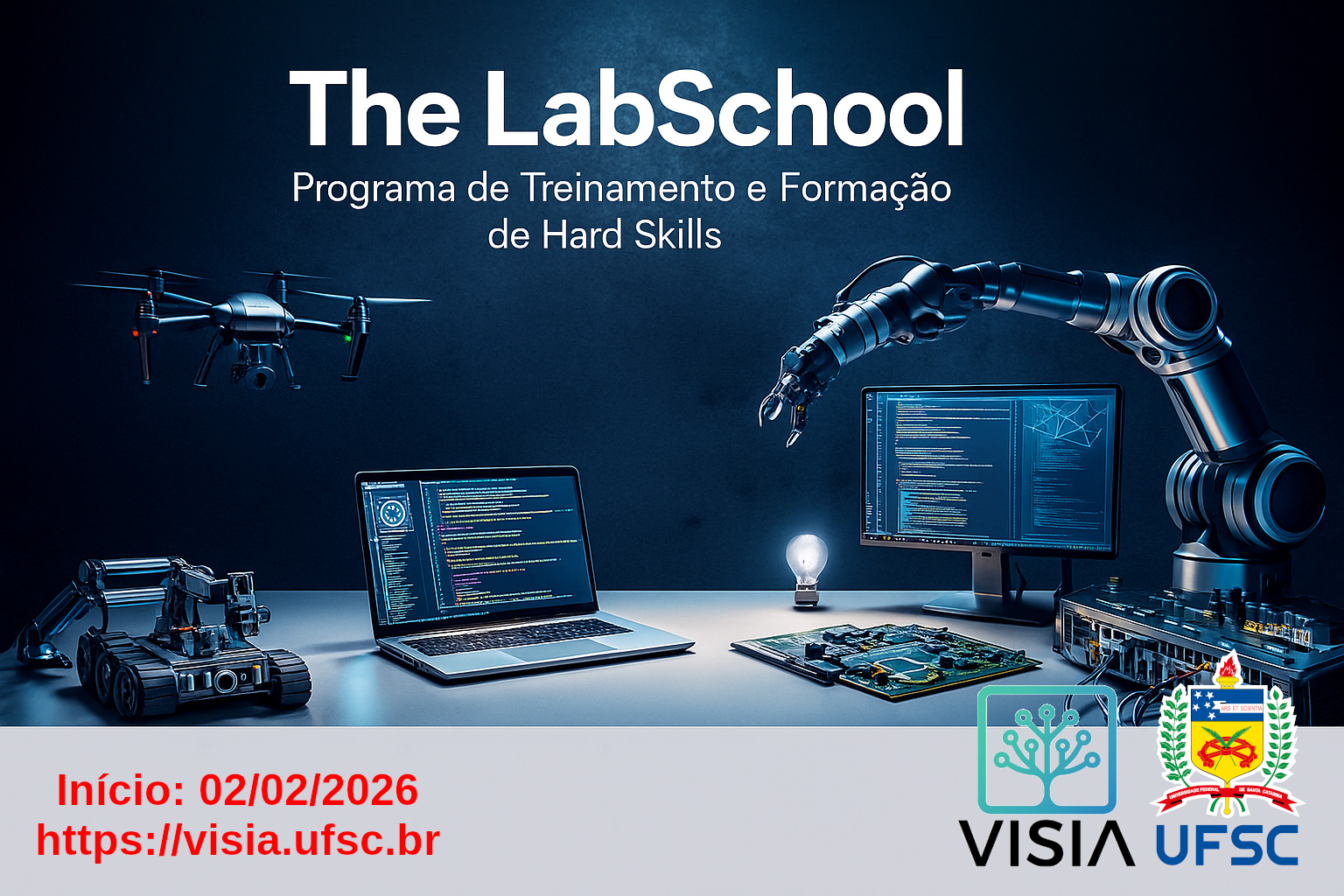
The extension project The LabSchool – Training and Hard Skills Development Program aims primarily to promote complementary technical and practical learning in strategic areas of computing and technology, preparing students, technicians, and community members for immediate professional engagement in innovation environments, technology-based companies, and research laboratories. The proposal differs from traditional academic training by focusing on mastering specific tools and technologies used in the productive sector, such as Docker, Git, computer vision libraries (OpenCV, YOLO, TensorFlow), backend frameworks (Node.js, Flask, FastAPI), and agile development methodologies. Although the project does not include direct participation from companies, the Hard Skills addressed were defined based on the consolidated experience of the VISIA Lab at UFSC, acquired through R&D&I projects funded by companies and public agencies, enabling the identification of the competencies most demanded by the technology market. The project is open to the community, with minimal participation requirements (basic technical programming knowledge), and seeks to offer opportunities for advanced undergraduate students to test and improve their communication and technical teaching skills by acting as tutors under faculty supervision.
General Objective:
To promote the development and enhancement of Hard Skills in computing, enabling students and professionals to perform competitively in the job market and in research laboratories within ICTs.
Specific Objectives:
– To offer intensive technical training in strategic areas of computing and technology, focusing on specific technologies (programming, data science, web development, image processing, computer vision, artificial intelligence, among others), aligned with the demands of partner companies and ICT laboratories;
– To develop applied competencies that enable qualified insertion of students and professionals into selection processes for scholarships, internships, and employment;
– To encourage practical and collaborative learning by integrating laboratory activities, real-world problem solving, and project development.
– To strengthen the connection between the university and the community, increasing the program’s social impact and scientific relevance;
– To create a continuous environment of innovation and capacity building.